Digital Math Jams:
from 0 to live classroom product
Math Jams is a free, low-prep math competition for grades 3–6, designed to bring the joy of problem solving into classrooms and homes
Product
Company
Role
Product Lead, 0→1. Led product, design, and curriculum from concept to live classroom use
Task
Bring the project from a Google Doc concept to a live product used at scale in schools.
Results
Nationwide reach from zero
Grew from no previous user base to tens of thousands of users across all U.S. states in eight months.
World-class teacher satisfaction
Teacher NPS reached a level associated with world-class products.
Teacher loyalty and super-user behavior
Most teachers ran more than one Jam during an event, and the most engaged super-users ran more than 10.
Curriculum recognition from a leading math-learning brand
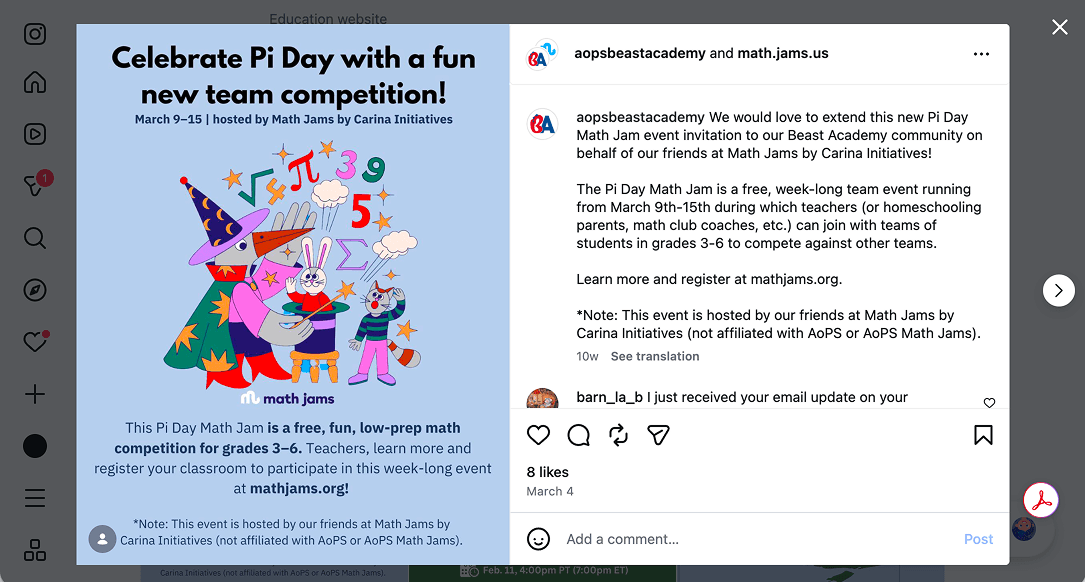
AoPS’ Beast Academy featured Math Jams and invited its audience to participate
About
Team
I worked alongside the leadership from Carina Initiatives and a CTO partner. My role included finding, hiring, and onboarding the curriculum and design teams (six people in total) and creating the working process between product, design, curriculum, and leadership.
Challenge
We needed to create a math competition format that would feel very different from existing competitions.
First, it had to be accessible not only by already “mathy” kids, but kids of all levels. And it needed to feel like a game, spark interest in problem solving, and be genuinely fun, so that every child could contribute regardless of level.
Second, it had to be extremely easy for teachers: the onboarding had to be fast and intuitive, and the experience had to fit naturally into the school day.
How might we design a math competition that feels like a joyful team game for students, remains mathematically rigorous, and is almost effortless for teachers to run?

Planning
First Prototype
At the first stage, I created a detailed wireframe prototype showing how the product would work end to end: teacher flow, student flow, game mechanics, classroom experience, and scoring logic. It was used for brainstorming with the leadership and turned the initial idea into a concrete product direction.
Based on the brainstorm, we decided to split the work into two phases:
MVP Stage (September – January)
A neutral version with the core product functionality.
MVP+ Stage. Kids Engagement (January – March)
A second stage focused on stronger student engagement and delight.

Metrics
Metrics and KPIs
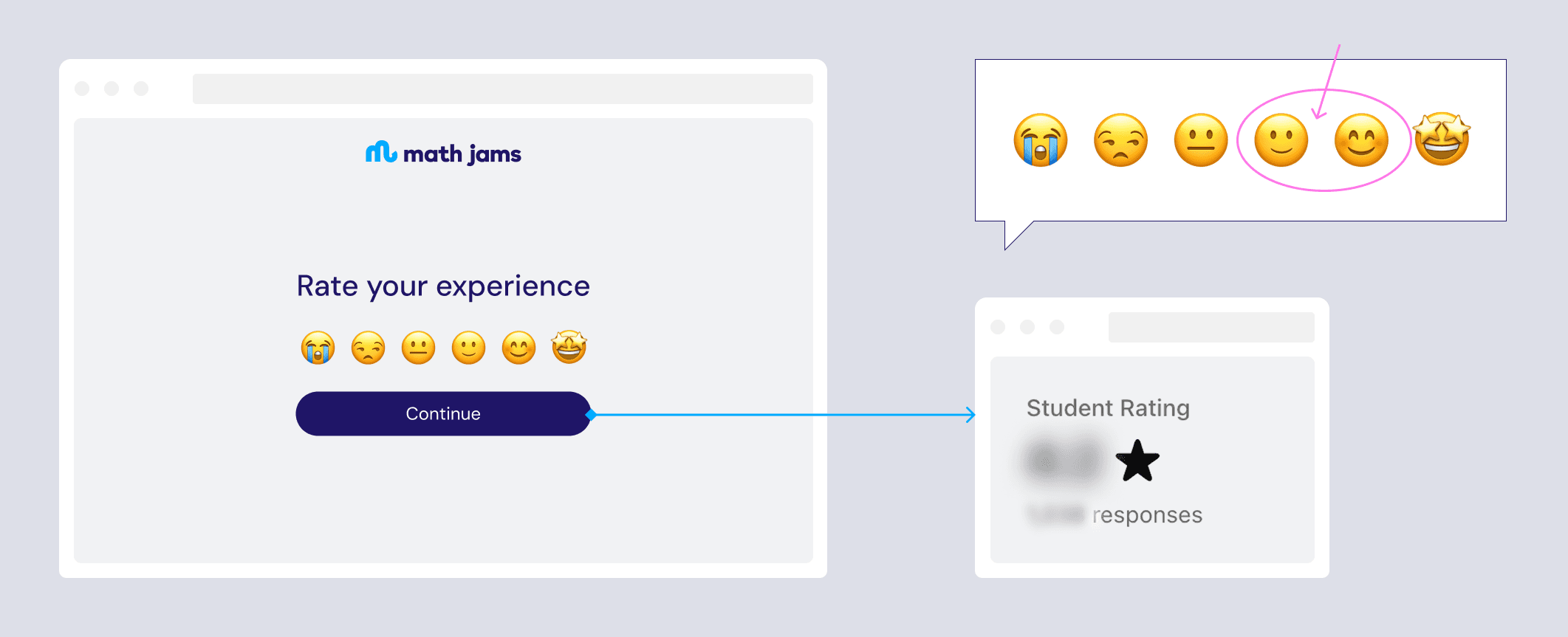
Before development started, I proposed a system of metrics to evaluate the product. The metrics were approved by leadership and became the basis for stage-specific KPIs.
The metrics included:
Teacher engagement,
Student engagement,
Funnel metrics: onboarding, conversion, acquisition
Learning metrics: challenge and accessibility
Technical metrics: reliability
Because this was done at the beginning, measurement was built into the product from the very start.
Work
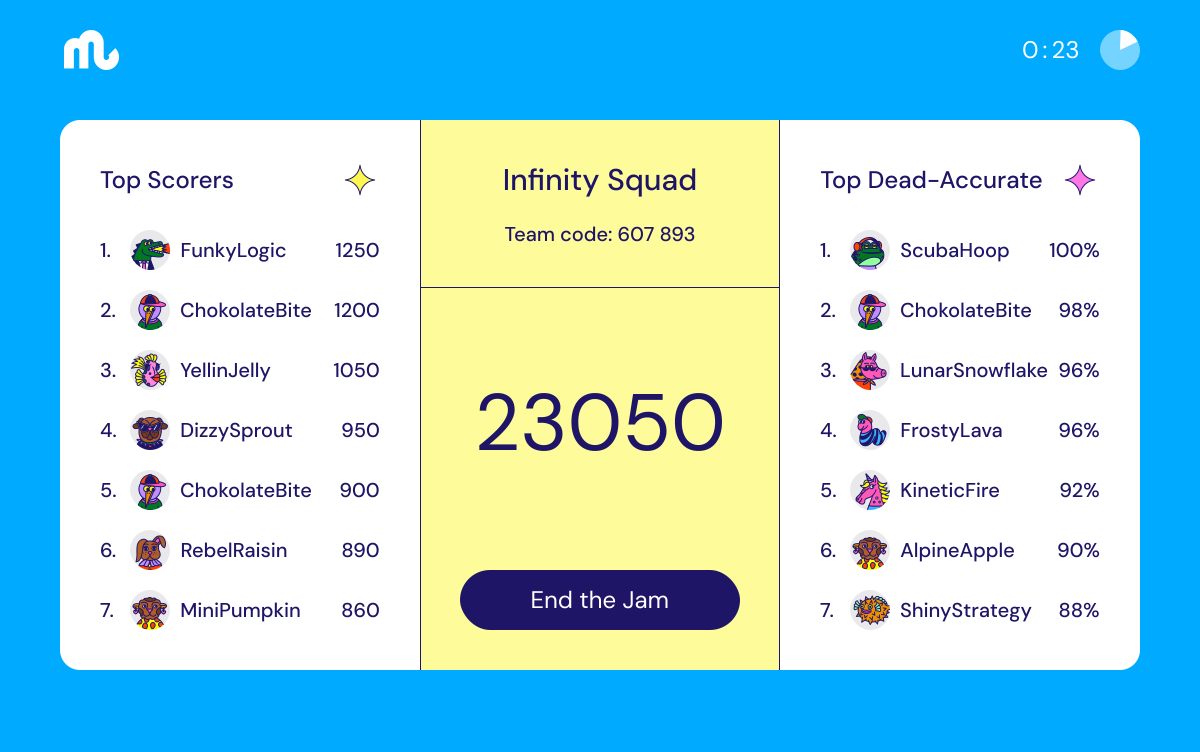
Decision 1. Make it a live team event, not an individual contest
Why: create classroom energy and broaden participation.
The event-based model creates urgency, classroom momentum, and a shared social experience. It also helps keep the product lightweight and focused on one clear goal, without unnecessary complexity.
The team-based experience helped create a more inclusive atmosphere: different students could contribute in different ways, and the focus shifted from “Who is the best at math?” to “How can we solve this together?”
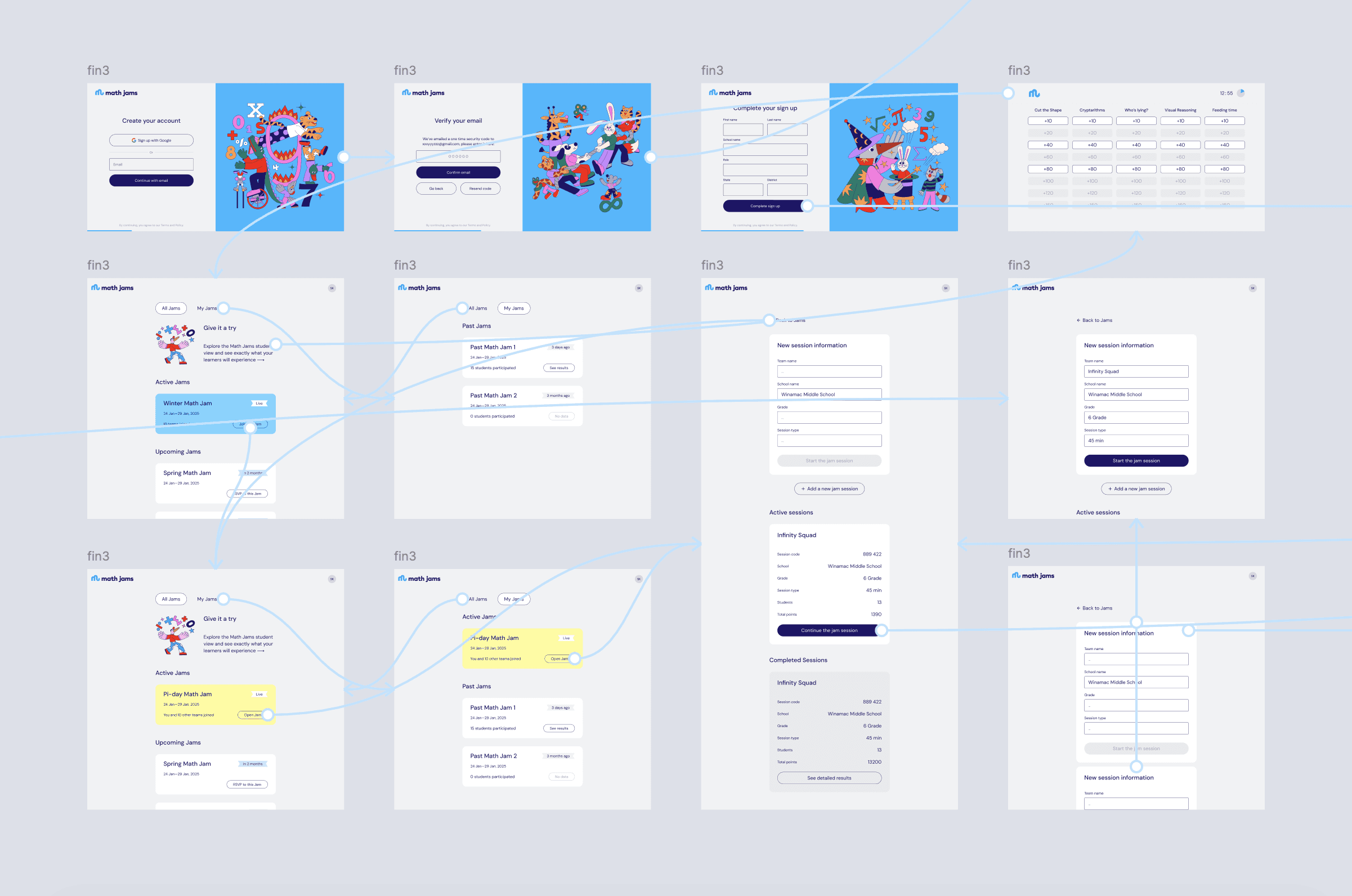
Decision 2. Make the teacher flow as quick, easy, and intuitive as possible for any teacher
Why: adoption depended on teacher confidence and speed.
The goal was to reduce cognitive load. Teachers should not need a long tutorial to understand what to do. We used widely adopted classroom products as UX benchmarks, so the flow would feel familiar: create a session, share a code, let students join, run the activity, and see results. For onboarding, we also looked at modern lightweight product patterns, like AI products that let users experience value quickly instead of reading long instructions.
Decision 3. Test the digital product on paper before building everything
Why: to validate classroom dynamics and problem difficulty before deeper engineering investment.
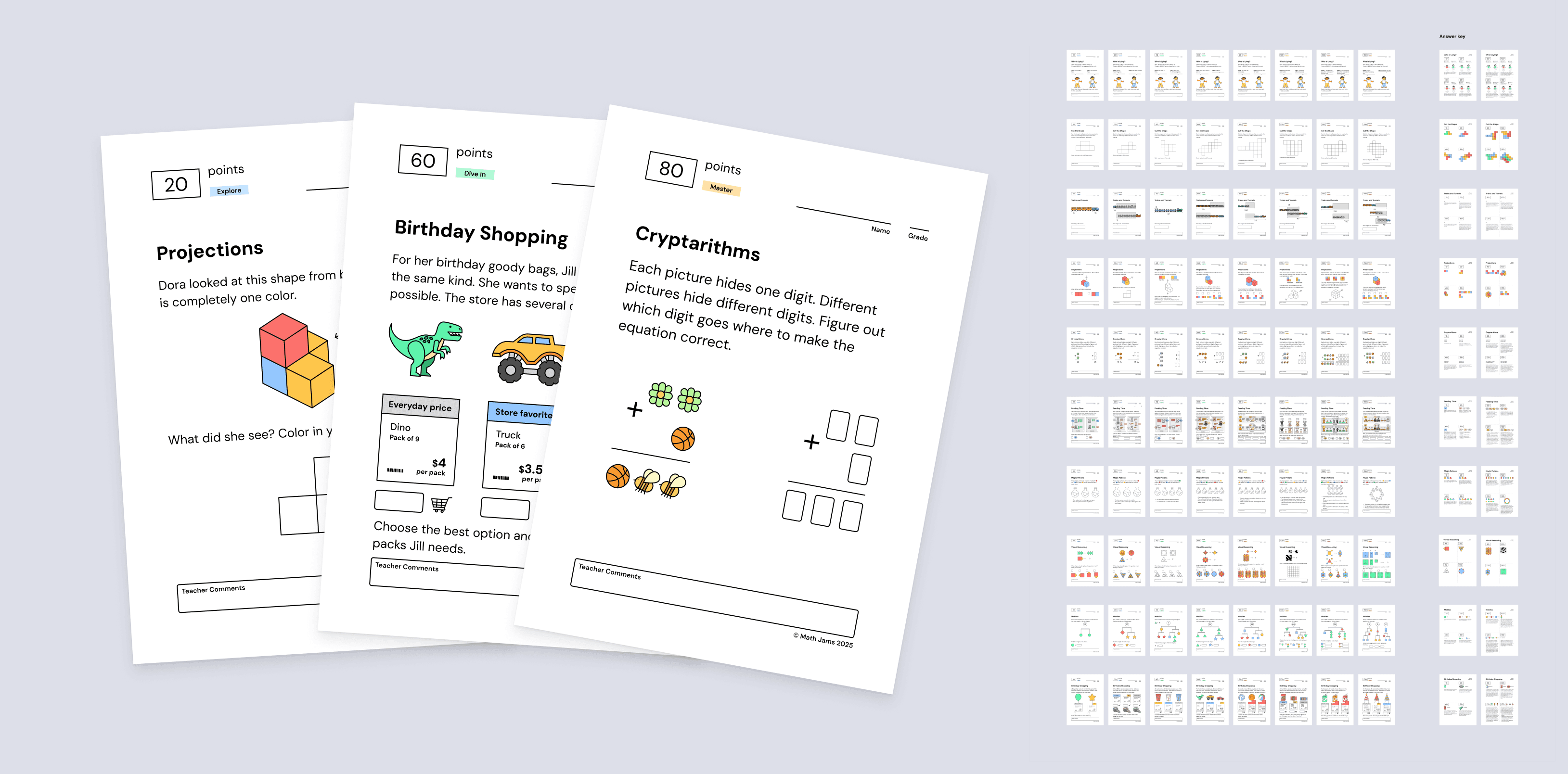
We ran a paper-based version in a district near Atlanta, with eight classrooms: two classrooms in each grade from 3 to 6.
To do this, we translated the digital flow into a paper classroom experience and tested pacing, problem difficulty, student engagement, and teacher experience.
The feedback was very positive, but it also gave us important product insights.
Based on the pilot, we decided to:
— simplify the problems overall;
— reduce the total number of problems;
— shorten the session time.
We also developed an internal monitor showing comparative problem difficulty, so the curriculum team could make better decisions in future iterations.
Overall, we had four testing iterations in the roadmap, even though the whole project timeline was only eight months.
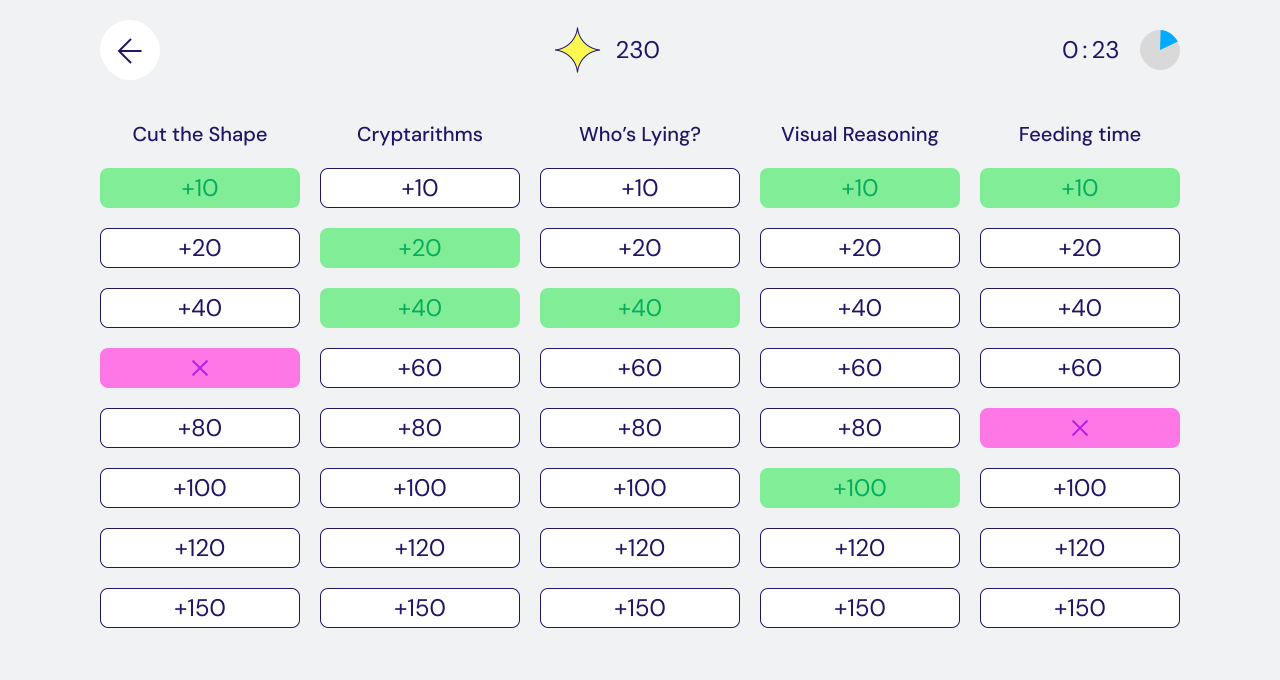
Decision 4. Use a Jeopardy-style problem matrix
Why: to support a low-floor / high-ceiling experience and let different students contribute.
The core learning objective was that any child in grades 3–6 should be able to solve some problems and contribute. At the same time, no student or team should be able to solve everything within the available time, so the experience would still preserve rigor and challenge.
We used a Jeopardy-style structure with different categories and increasing difficulty levels. This allowed students with different strengths and confidence levels to create their own strategies and find an appropriate level of challenge.
Decision 5. Use Demo Jam as product-led onboarding
Why: the easiest way to explain the product was to let teachers experience it.
One important product decision was to connect the product flow and the marketing flow into one system. Instead of relying on video tutorials, testimonials, or FOMO, I decided to make the product itself the strongest onboarding tool.
We created Demo Jam so that teachers could quickly see what they would get inside and try the experience between live events. This made onboarding more honest and more efficient: teachers could immediately understand whether Math Jams would work for their classroom.
Result: The Demo Jam link spread separately from the paid marketing campaign, and the number of people who tried the demo was several times higher than the number who came through ads.
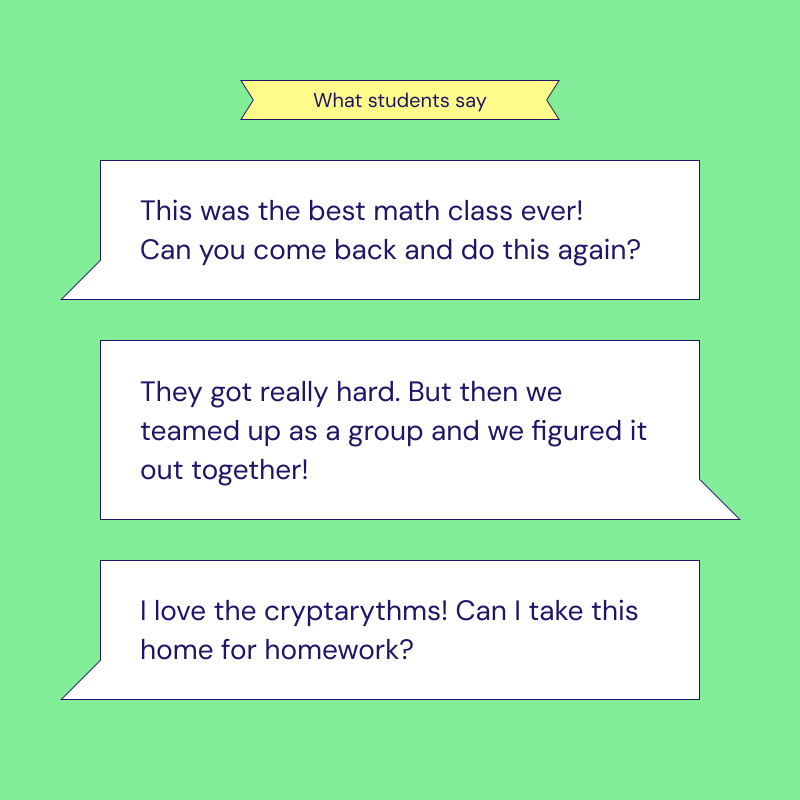
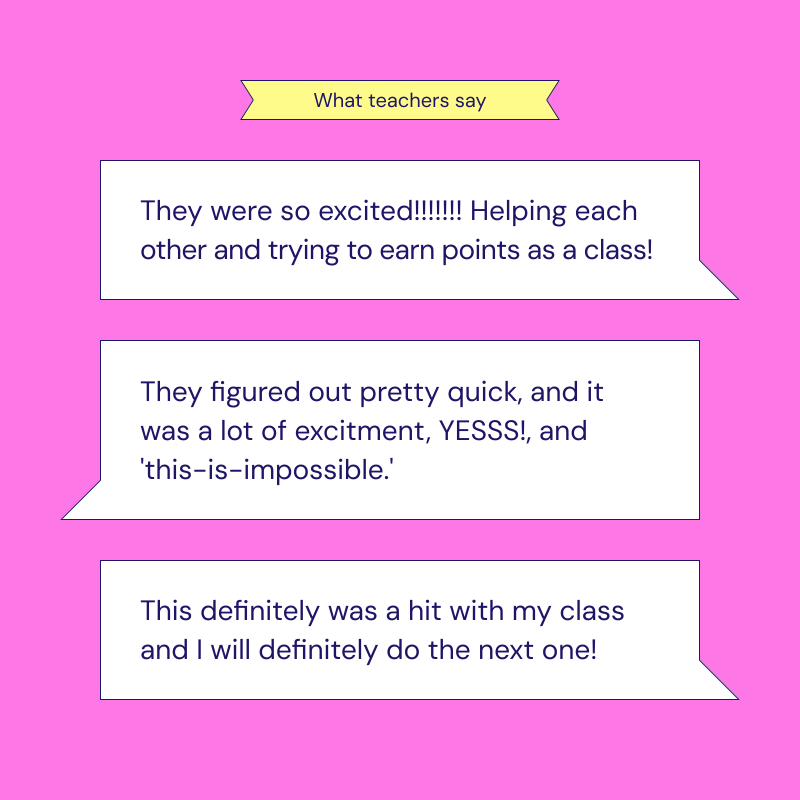
Results
From zero to nationwide classroom use in 8 months, with tens of thousands of students, world-class NPS, and recognition from a leading math-learning brand.
01
Nationwide reach from zero
Grew from no previous user base to tens of thousands of students across all U.S. states in eight months.
02
World-class teacher satisfaction
Teacher NPS reached a level typically associated with top-performing products.
03
Teacher loyalty and super-user behavior
Most teachers ran more than one Jam during an event, and the most engaged super-users ran more than 10.
04
Curriculum recognition from a leading math-learning brand
AoPS’ Beast Academy featured Math Jams and invited its audience to participate